
Add governed AI agents to any business system you already run.
An embeddable AI layer that drops into your existing app — and lets agents understand the screen, respect your permissions, act only through approved tools, and log every decision. No rebuild. No second identity system.
Integrate through two small seams — a web component and a five-method adapter — without changing the platform core.
Generic AI chatbots don't work where the work actually happens.
Most AI assistants live in a separate window, disconnected from the systems where your teams do real work. They answer questions — but can't be trusted to take action.
Blind to context
Can't see the record or screen the user is on.
Ignore permissions
No concept of what this user is allowed to do.
Can't act safely
Take action with no approval or record — or not at all.
No accountability
No audit trail of what was decided, or why.
Bolted on
A separate tab, not part of your product.
The problem isn't the model. It's the missing layer between the model and your business.
The governed layer between AI and your business.
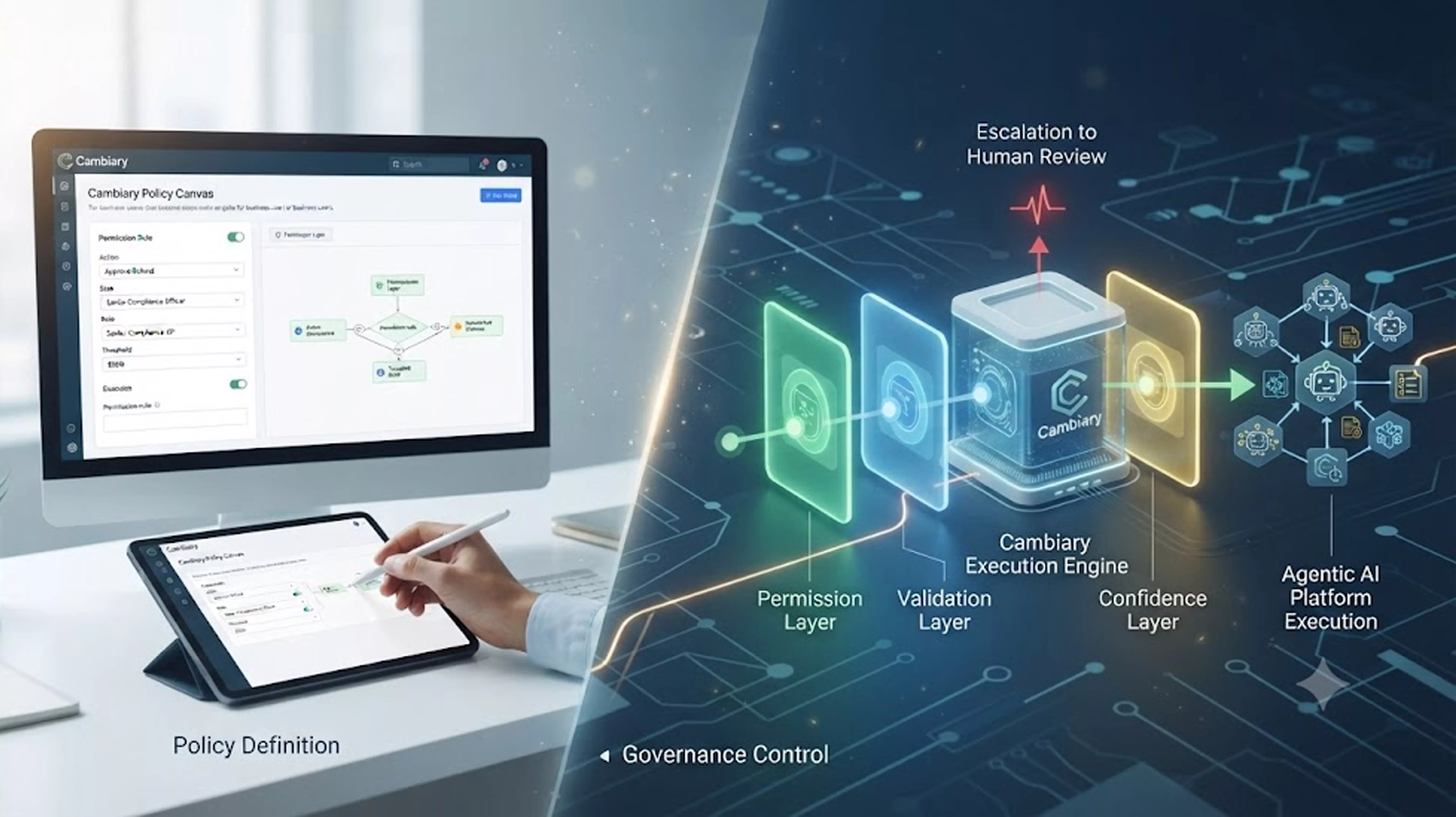
Your app exposes its context, tools, permissions, and workflows through two small seams. Agents then plan, act through approved tools, pause for approval before anything sensitive, render interactive results, and stay fully auditable — inside the app your users already use.
Think of the platform as the brain and your application as the body. The brain holds zero application-specific code — it never needs to know what your system is.
Four reasons a governed layer beats a bolt-on.
Trust you can prove
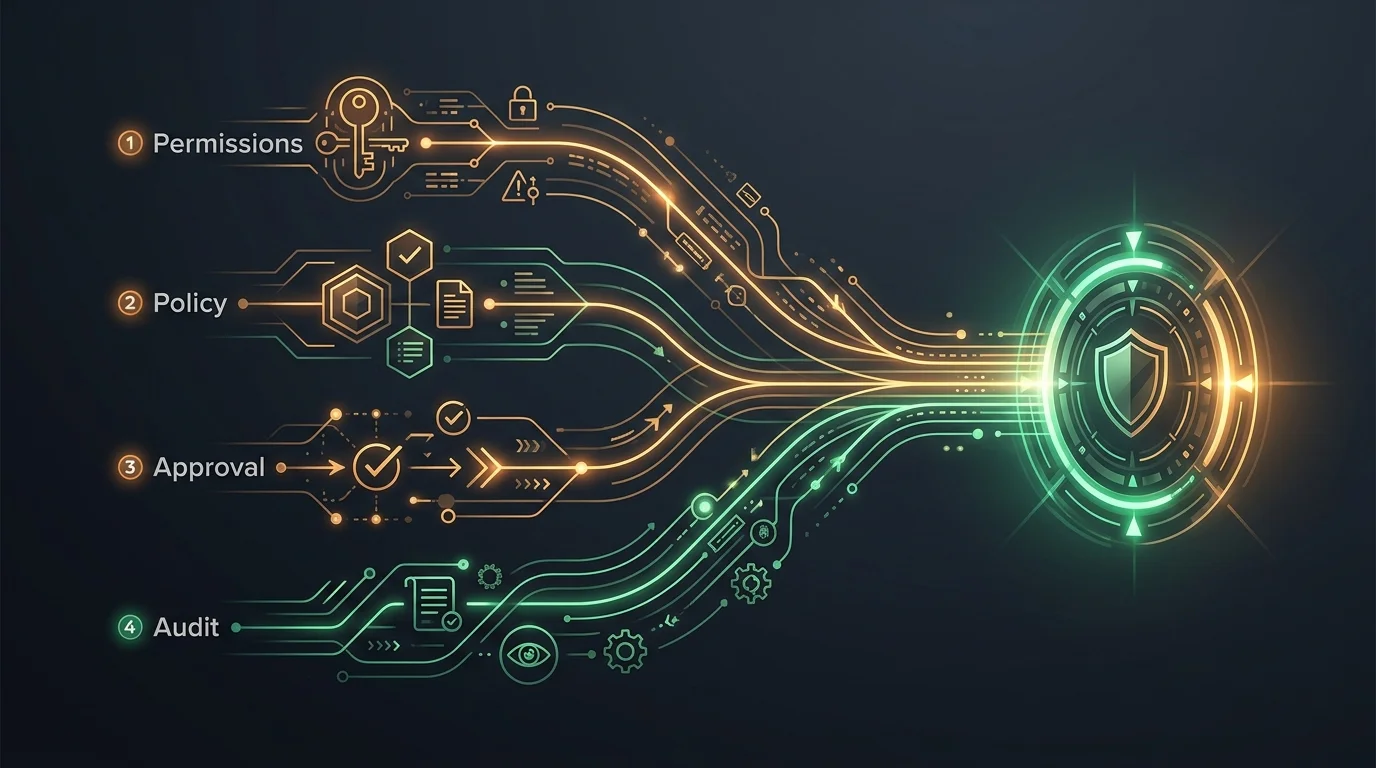
Every side-effecting action flows through a single governance gate — permission, policy, approval, and an append-only audit — with no bypass, even across the language boundary.
Works in the app you have
Embed a single web component and implement a five-method adapter. No rebuild, no rip-and-replace, no change to the platform core.
Build agents without code
Authors create agents and declarative skills from a console; new skills are data, discovered and loaded on demand — not a deploy.
Answers that show their work
Agents render plans, comparisons, tables, and diagrams as interactive cards, and every output states what it was based on.
Eight capabilities. All built, all tested.
A quick tour of the layer. See the full feature set →
Governance gateway
One choke point: user ∩ agent ∩ org policy, fail-closed, from read-only to destructive.
Human-in-the-loop
Agents propose a plan and wait; sensitive actions need an explicit yes. Destructive actions blocked.
Context engineering
The model sees minimized references, not raw data. Cross-record mixing blocked; stale context flagged.
No-code authoring
Author agents and skills, then teach new skills interactively — drafts stay drafts until you publish.
Multi-agent teams
A coordinator plus specialists with isolated state, audited handoffs, and re-checked permissions.
12 interactive cards
Plans, approvals, results, comparisons, tables, and mermaid diagrams — no front-end coding.
Voice surface
Talk to agents over OpenAI Realtime; the API key never reaches the browser; approvals still require a yes.
Reporting agents
Ask in plain language, get governed, provenance-tagged tables and diagrams — reads governed like writes.
Explore the core capabilities of Allowix.
Enterprise AI agent integration built for the real world.
Context-Aware Autonomous AI Agents
Our autonomous AI agents are built to deeply understand the user's specific context. Rather than generic responses, the agents read the screen, analyze the data in front of them, and execute tasks with high precision. Experience the pinnacle of Allowix capabilities.
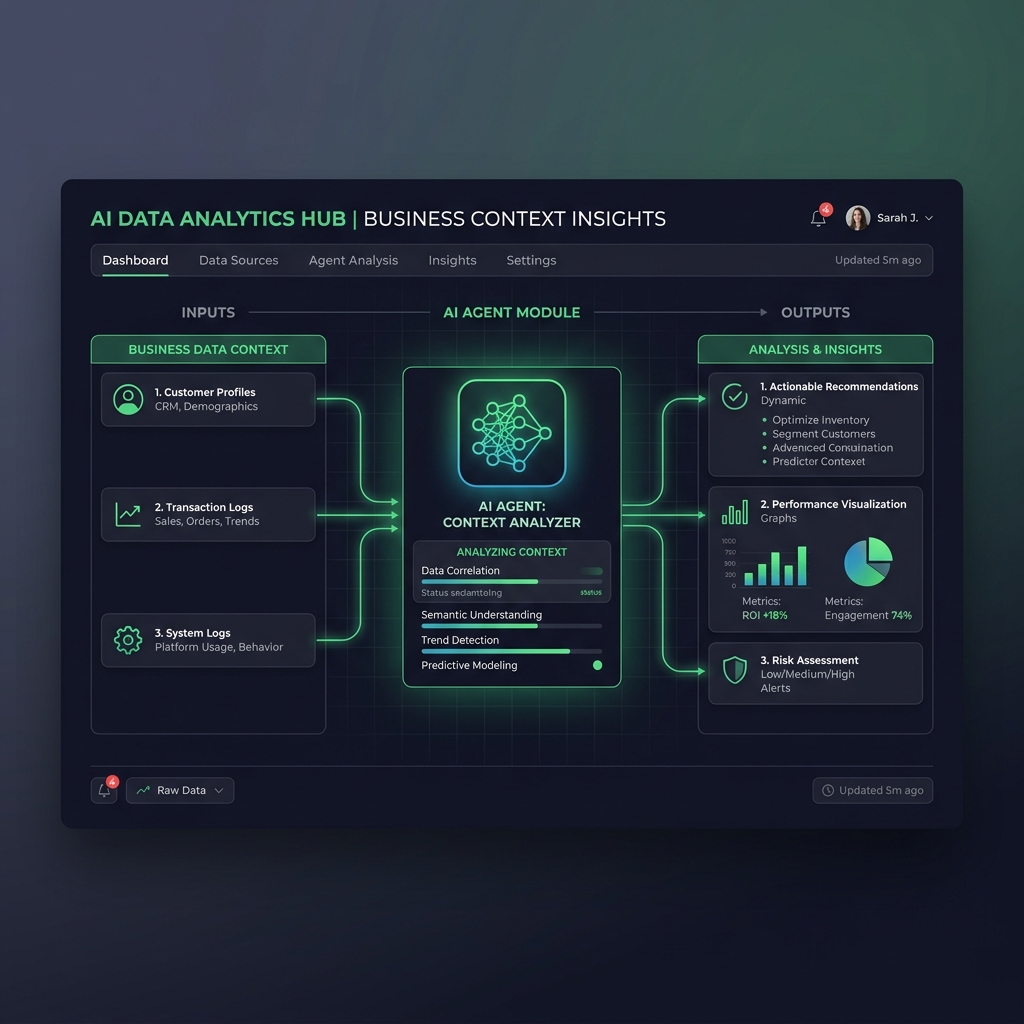
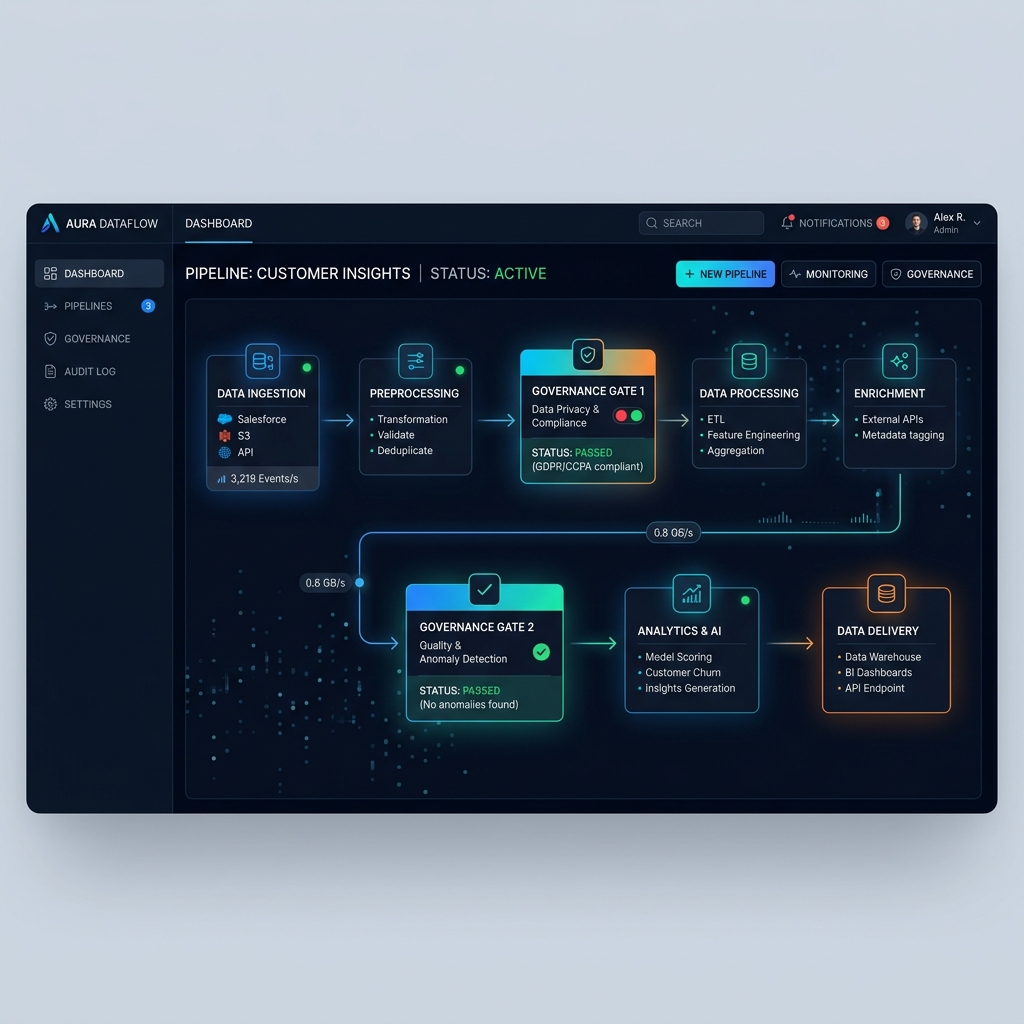
Enterprise-Grade AI Workflow Automation
Take your business to the next level with secure AI workflow automation. The system ensures every action flows through strict governance gates, providing an immutable audit trail while scaling your operations securely.
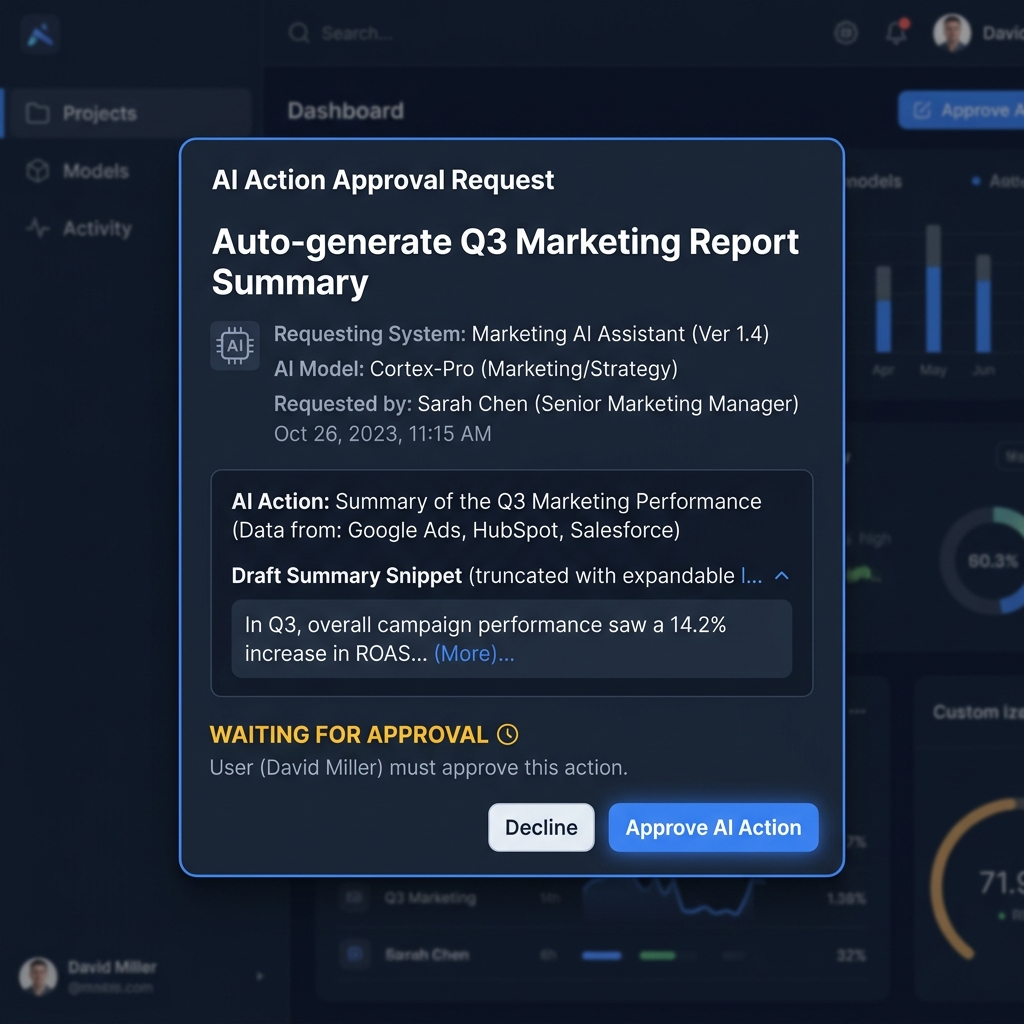
Human-in-the-Loop AI Governance
Safety comes first with human-in-the-loop AI. Sensitive actions are never executed blindly. Instead, the agent proposes a plan and waits for an explicit approval, keeping you in complete control of the AI agent integration.
Three steps to a governed agent in your app.
Embed the panel
Drop the <agentic-panel> web component into any modern web stack — Angular, React, Vue, Razor/MVC, or plain HTML — and pass a references-only context.
Implement the adapter
Write a five-method adapter — validateToken, getContext, getPermissions, executeTool, pushNotification — in-process or over HTTP in any language. Your adapter is the authority.
Author agents and go
Define tools with risk levels, author agents and skills in the console, and your users get governed AI in the surface they already use — no platform-core changes.
The same governed layer, across very different work.
Explore use cases and industries.
Customer support
Reads the ticket in front of the agent, respects who can refund or escalate, and pauses before touching an account.
Retail & e-commerce
Track an order (read-only), but route a refund or stock change through approval. One adapter serves shoppers and merchants.
Back-office & admin
Agents draft records, summarize related data, and complete multi-step workflows — every write gated and logged.
Reporting & analytics
Answer questions in plain language, return provenance-tagged tables and diagrams — under the same permissions as everything else.
Sales & revenue ops
Assemble context across records and stage sensitive actions for a human to approve, inside your CRM.
Candidate screening
Discover, parse, score against a rubric, match, and render explainable cards — our worked, end-to-end proof.
Governance is an invariant, not a setting.
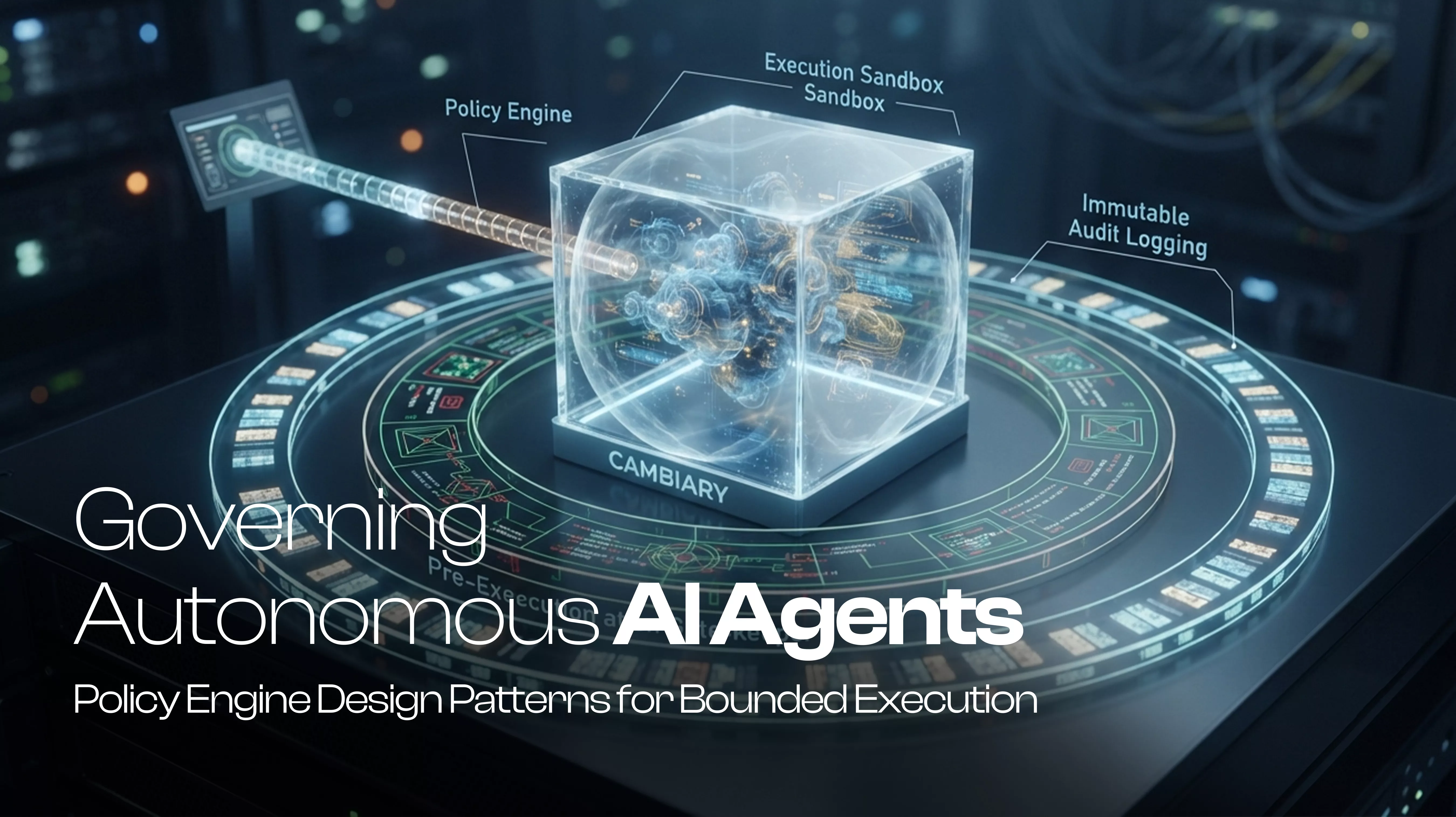
The AI runtime can never execute a side-effecting tool directly — it must call back through the single governance gate, which runs permission, policy, approval, and audit on every action, even across the service boundary.
The platform issues no identities — your token and adapter are the source of truth.
Agents only ever do the intersection of user, agent, and org policy — and default to deny.
Every decision recorded using ids and references, never raw record content.
Injection attempts are evaluated at the governance boundary and blocked in our test suite.
Certifications: none claimed · Single-tenant today; full multi-tenant isolation on the roadmap. See the security model →
Why upgrade to Allowix?
Traditional chatbots are passive and limited. Autonomous AI agents actively solve problems, automate complex enterprise workflows, and integrate directly into the tools your team already uses.
Straight answers.
Do we have to rebuild our app?
Which frameworks does it work with?
Which AI models does it use?
Can the AI take actions on its own?
Where does our data go?
Is it production-ready?
See governed AI running inside an app like yours.
We'll walk you through the two integration seams, the governance gate, and a live workflow — using an example close to your stack.